ADGM Academy is taking a practical approach to entrepreneurship development as the UAE’s startup ecosystem increasingly shifts from simply encouraging business formation towards building founders capable of creating sustainable and globally competitive companies.
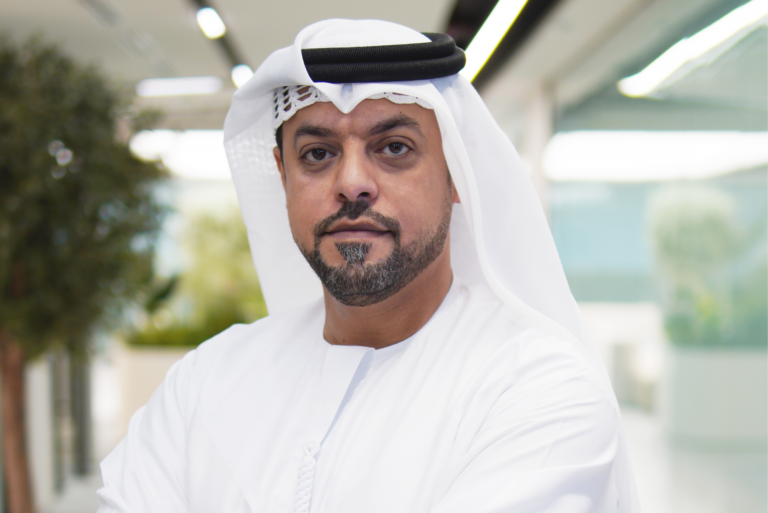
Ali Al Mehairi, Senior Executive Director for Business Enablement at ADGM Academy, the knowledge arm of Abu Dhabi Global Market (ADGM), said the country’s entrepreneurship ecosystem is becoming more connected, bringing founders closer to talent, funding, markets and international opportunities.
According to Al Mehairi, some of the strongest opportunities for the next generation of entrepreneurs are emerging in artificial intelligence, advanced industries, sustainability and the digital economy.
He said UAE National entrepreneurs are particularly well positioned to develop solutions that address local needs while possessing the potential to scale internationally.
For ADGM Academy, the objective is to translate that potential into a stronger pipeline of commercially capable and investment-ready founders.
The focus comes as Emirati entrepreneurship continues to expand.
According to figures from the UAE Ministry of Economy and Tourism in January 2026, the number of small and medium-sized enterprises owned by UAE nationals increased by 63 per cent over five years.
The growth underlines the increasing participation of Emiratis in the country’s private-sector and entrepreneurship landscape, while also highlighting the need for programmes that can help founders navigate the practical challenges of building and scaling businesses.
ADGM Academy has developed a range of initiatives designed to support entrepreneurs and business owners at different stages of their journey.
Its programmes include the Entrepreneurship Program, delivered in partnership with Khalifa Fund to support startups and SMEs, as well as the Future Entrepreneurs Program, which provides hands-on support to Emiratis, job seekers and young people.
The academy also runs the five-day Ruwad Al Ain Bootcamp, designed to help participants develop business skills while building networks that can support their entrepreneurial ambitions.
ADGM Academy said it trained more than 500 entrepreneurs across the UAE in 2025.
Beyond its entrepreneurship programmes, the academy is also contributing to Abu Dhabi’s wider national talent-development agenda.
Its 2025 Annual Report recorded training for 2,244 Emiratis during the year, taking the total number trained since 2019 to 10,779.
For Al Mehairi, the role of entrepreneurship education goes beyond teaching traditional business concepts.
He believes effective entrepreneurship education must be applied, iterative and connected directly to market realities.
That means combining business fundamentals with practical challenges, customer discovery, guidance from experienced practitioners and repeated opportunities for founders to test and refine their decisions.
The approach is particularly relevant as technology continues to reshape industries and create new business models.
Entrepreneurs increasingly need to understand not only how emerging technologies work but also how they can be applied to solve genuine customer problems.
At the same time, founders need financial discipline, commercial judgement and the ability to adapt as market conditions change.
Al Mehairi said the founders who will define the UAE’s next phase of economic development will be those capable of combining innovation with disciplined execution and building companies that can compete beyond their home market.
FROM IDEAS TO COMMERCIAL VIABILITY
One of the key challenges facing first-time entrepreneurs is the transition from having a strong idea to proving that customers are willing to pay for it.
Al Mehairi said his work with founders in Al Ain has shown that many entrepreneurs begin with technical expertise or a strong commitment to solving a particular problem.
However, they may have less experience in evaluating customer demand, identifying the right market, forecasting financial requirements or assessing different funding options.
This creates a need for structured and practical support.
Rather than encouraging entrepreneurs to scale immediately, programmes need to help them validate the problem, define the target customer, test the economics of the business and establish measurable milestones.
According to Al Mehairi, mentorship, market access and expert guidance are most valuable when they are integrated throughout this process rather than offered as isolated activities.
The approach reflects a broader understanding of entrepreneurship education: founders need opportunities to make decisions in realistic situations before they face the full consequences of those decisions in the market.
MENTORSHIP AS A CORE COMPONENT
Mentorship is another important component of ADGM Academy’s entrepreneurship approach.
Al Mehairi said effective mentor-founder relationships should be based on candour, relevance and accountability.
Rather than simply offering encouragement, mentors should challenge assumptions, draw on their own experience and help founders focus on decisions that can materially influence the success of their ventures.
The importance of mentorship is also reflected in wider research across the Middle East and North Africa.
A PwC Middle East report published in August 2025, titled “Why Entrepreneurial Capabilities Are Key to Empowering MENA’s Youth”, identified mentorship and structured entrepreneurship education as important priorities for developing viable businesses among young people.
The report noted that entrepreneurship across MENA had expanded substantially over the previous five years, with 46 per cent of employees indicating that they were ready to start a business.
However, the research also highlighted the importance of sustained support.
According to the report, only 35 per cent of small businesses without mentors survive for more than five years, compared with twice that rate among businesses with mentors.
The findings reinforce the role that experienced business leaders can play in helping new entrepreneurs navigate uncertainty, avoid common mistakes and develop stronger commercial decision-making skills.
PwC also recommended that governments and businesses facilitate structured programmes connecting young founders with experienced mentors.
Such initiatives can provide entrepreneurs with opportunities to learn from established business leaders while developing networks and gaining exposure to real-world challenges.
EXPANDING ENTREPRENEURSHIP SUPPORT ACROSS ABU DHABI
ADGM Academy is now looking to expand its entrepreneurship work across Abu Dhabi, including into Al Dhafra.
The academy plans to maintain consistent training standards while adapting programme delivery to the specific needs and opportunities of individual communities.
This could involve developing relevant industry focus areas, using practical case studies, establishing mentor networks and creating opportunities for market access.
For Al Mehairi, the experience of working with entrepreneurs in Al Ain demonstrated that entrepreneurial talent exists across different communities.
However, the economic impact of that talent can be greater when support programmes are designed around local opportunities and aspirations.
The planned expansion therefore reflects a broader approach to entrepreneurship development in Abu Dhabi.
Rather than concentrating support exclusively in established business centres, the objective is to bring training, networks and opportunities closer to entrepreneurs in different parts of the emirate.
This could be particularly important for founders who have strong local knowledge but limited access to established business networks.
FROM TRAINING TO INCUBATION AND FUNDING
Al Mehairi believes that the next stage of entrepreneurship development will require stronger coordination between different parts of the ecosystem.
Training alone may not be sufficient to transform an entrepreneurial idea into a growing company.
Founders also need access to incubation, customers, funding, talent and experienced advisers.
Universities can play an important role by developing early entrepreneurial capabilities among students and researchers.
Government entities can align entrepreneurship support with regional and national economic priorities.
Private-sector companies can provide entrepreneurs with access to real business problems, potential customers and supply-chain opportunities.
Investors can contribute commercial discipline as well as growth capital.
According to Al Mehairi, stronger coordination among these groups could help close the gap between entrepreneurship education and actual business growth.
The objective is to create a clearer pathway through which an entrepreneur can move from learning the fundamentals of business to testing an idea, launching a company, accessing customers, securing investment and eventually scaling.
BUILDING INVESTMENT-READY FOUNDERS
The concept of investment readiness is becoming increasingly important as startup ecosystems mature.
For founders, securing funding is not simply about having an innovative idea.
Investors typically require evidence of market demand, a credible business model, financial planning, growth potential and a capable management team.
Entrepreneurship programmes can therefore play an important role in helping founders understand how investors evaluate businesses.
ADGM Academy’s practical approach is designed to help entrepreneurs establish measurable milestones and test the economics of their businesses before pursuing significant growth.
This can help founders develop a clearer understanding of what they need to achieve before approaching investors.
It can also help entrepreneurs identify weaknesses in their business models at an earlier stage.
For UAE National entrepreneurs, this development is particularly relevant as the country’s SME ecosystem continues to expand.
The combination of local talent, government support, private-sector opportunities and access to international markets could create opportunities for Emirati founders to build companies with a wider geographic footprint.
AI, ADVANCED INDUSTRIES AND THE DIGITAL ECONOMY
Emerging technologies are expected to remain a major source of entrepreneurial opportunity.
Al Mehairi identified artificial intelligence, advanced industries, sustainability and the digital economy among the areas where strong opportunities are emerging.
Artificial intelligence, in particular, is transforming how companies develop products, deliver services and manage operations.
For entrepreneurs, however, the challenge is to move beyond adopting technology for its own sake.
Successful businesses need to identify a specific customer problem and demonstrate how technology can solve it more effectively or efficiently.
That requires entrepreneurs to combine technical understanding with commercial judgement.
The same principle applies to sustainability and advanced industries, where founders need to understand both technological possibilities and market demand.
LOCAL ROOTS, GLOBAL AMBITION
A central theme of ADGM Academy’s approach is the connection between locally relevant entrepreneurship and international potential.
The UAE is seeking to develop companies that can address domestic needs while also competing in global markets.
For Al Mehairi, UAE National entrepreneurs are particularly well positioned to achieve this because of their understanding of the local market and the wider opportunities created by the country’s international economic links.
Building globally competitive companies, however, requires founders to develop capabilities that extend beyond their immediate market.
This includes understanding international customers, managing cross-border operations, accessing global capital and developing products that can compete on quality and value.
Entrepreneurship education can help provide the foundation for that transition.
A MORE CONNECTED ENTREPRENEURSHIP ECOSYSTEM
ADGM Academy’s expanding programmes reflect a broader evolution in the UAE’s entrepreneurship landscape.
The focus is increasingly moving from the number of startups created towards the quality, resilience and growth potential of those businesses.
That requires an ecosystem in which entrepreneurs can access support at different stages of their journey.
A founder may begin with university-based entrepreneurship education, move into a practical accelerator or bootcamp, receive mentorship while validating a business model, gain access to customers through corporate partnerships and eventually secure funding for expansion.
Creating stronger connections between these stages could reduce the gaps that entrepreneurs often encounter after completing an educational programme.
It could also help ensure that entrepreneurial talent outside major commercial centres receives access to similar opportunities.
For Abu Dhabi, expanding these programmes across different communities could therefore support a more geographically inclusive entrepreneurship ecosystem.
THE ROAD AHEAD
ADGM Academy’s approach places practical capability at the centre of entrepreneurship development.
The objective is not simply to teach founders how to create business plans but to help them understand customers, test assumptions, manage finances, assess funding options and make decisions in response to market evidence.
Mentorship adds another layer by connecting entrepreneurs with people who have already experienced the challenges of building businesses.
Market access can then help founders test their products and services against real customers, while funding and incubation can provide the resources required for growth.
As the academy expands its entrepreneurship programmes across Abu Dhabi, including Al Dhafra, the challenge will be maintaining consistent standards while ensuring that programmes remain relevant to local communities.
For Al Mehairi, the broader goal is to connect UAE National talent with the expertise, networks and opportunities needed to turn entrepreneurial potential into productive enterprises.
The UAE’s entrepreneurship strategy is increasingly focused on creating companies that can generate skilled employment, intellectual property and new sources of economic value.
ADGM Academy’s programmes form one part of that wider ecosystem.
By combining practical education with mentorship, market access and stronger connections between government, universities, businesses and investors, Abu Dhabi is seeking to create a clearer pathway for entrepreneurs from their first business idea to sustainable enterprise.
For the next generation of founders, the emphasis is increasingly clear: innovation can open the door, but commercial discipline, customer understanding, adaptability and execution will determine how far the business can go.